This month marks one year since I started working at Hugging Face. This is an honor I couldn’t have imagined just a few years ago. I’ll take this opportunity to reflect on some things I got right this year and some I got wrong. You can also use this as general advice if you would like to get a job at a company like Hugging Face.
What I’ve been doing
Most of my work at Hugging Face is on the YouTube channel. My main responsibility is making the Hub approachable, and the way I have done this is by creating video tutorials. My tutorials usually don’t focus on the Hub itself—rather, they show how to use it in tutorials on various topics. For example, my latest video covers the architecture of the DeepSeek Harness. The main goal of the video is to explain at a high level how DSH works and how it differs from other agent harnesses. But in the video, I also cover how to use it with other open models from the Hub. I’ve published several videos like this over the year, aiming to grow the channel and improve our educational material.
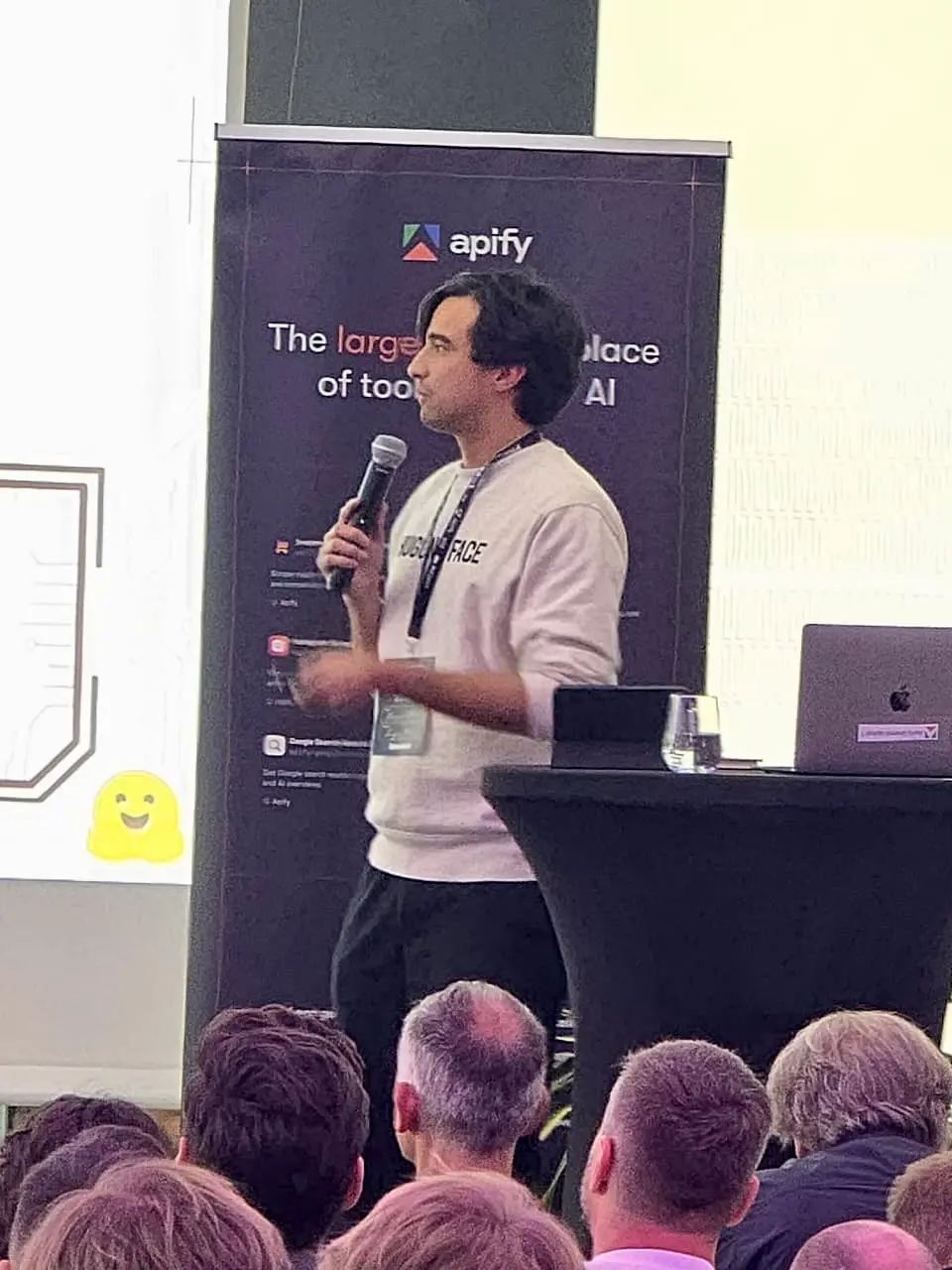
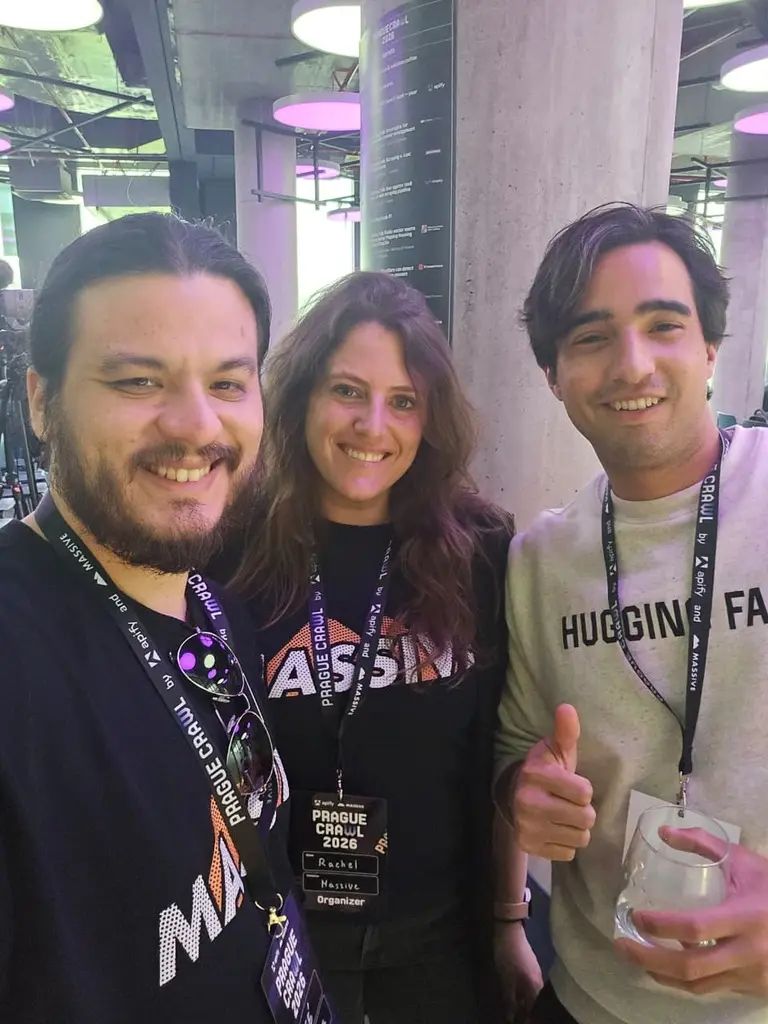
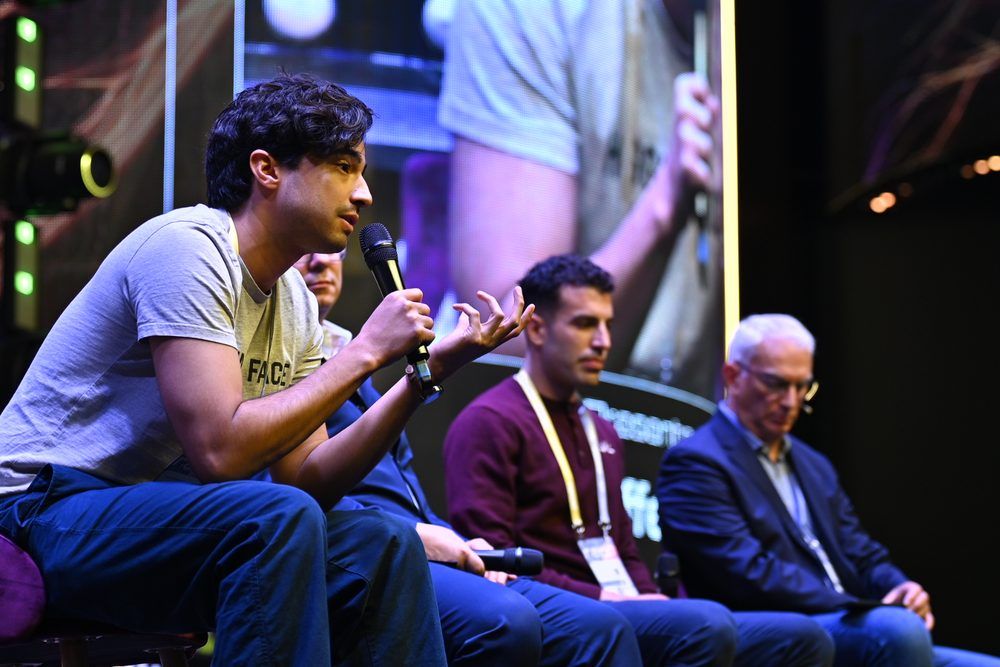
Other than that, I have also been speaking at live events. This is something I started doing more often in the second half of the year. Every event has been an opportunity to connect in person with valuable members of the community. My next talk is next week at PyCon Dublin, where I will be talking about open models in coding agents and how coding agents are designed.
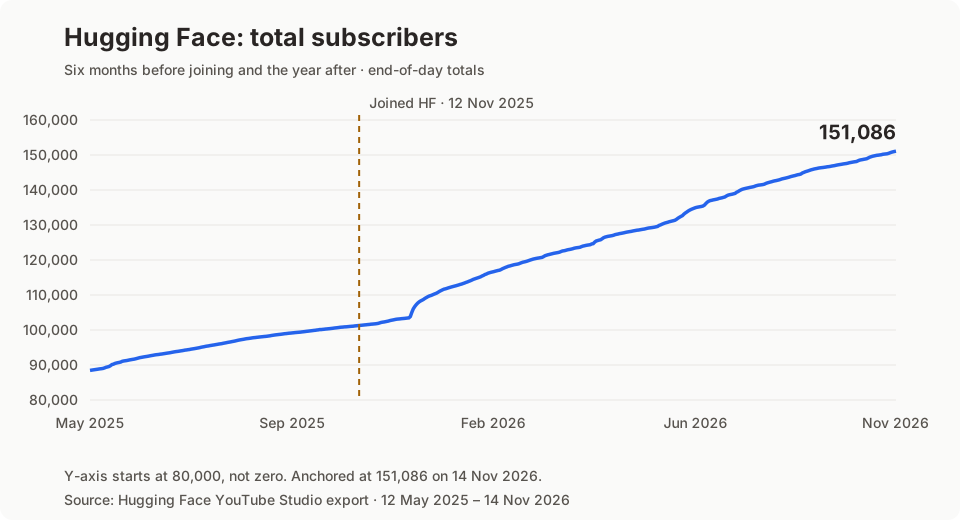
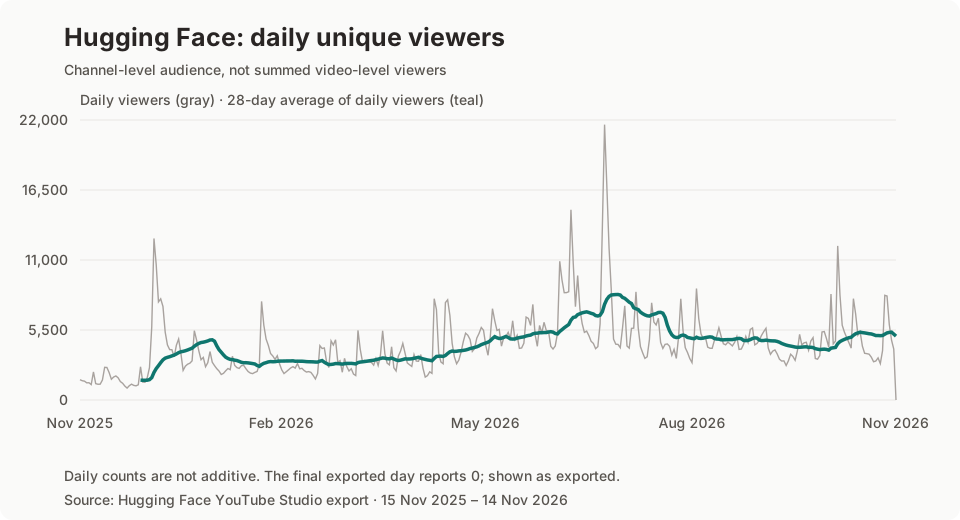
This year, other members of the Hugging Face team have been publishing great content on YouTube too. Together, we have grown the channel a lot. Over the year, the channel grew by 50k subscribers and the daily audience grew fivefold.
The charts below includes six months before I joined on November 12, 2025, with that date marked for context. Of course, this is a team effort; the comparison doesn’t isolate my contribution. For instance, the big change in momentum started with this great video by David Louapre about steering models without fine-tuning.
The second chart shows daily unique viewers. The teal line smooths daily fluctuations using a trailing 28-day average—it is not a count of unique viewers over a month.
Some of my favorite content by my peers includes:
- Training Agents by Ben and Sergio
- Local AI series by Merve
- Harness Optimization by Joel
- MoEs in Transformers by Aritra, Pedro, Merve, Ilyas, Arthur, Sergio, and Pablo.
- LLMs for Science by David
What I got right
Architecture beats code
I joined HF in November 2025 as a developer advocate, primarily because of my work on my YouTube channel. When I signed the contract, I was thinking about making lots of videos about our libraries and how their code works, along with notebook overviews. But just one month later, GPT-5.2-Codex came out and made me realize that I would not be coding by hand for much longer. Claude Opus 4.6, two months later, removed any doubts from my mind. This was a problem because my most popular content was coding tutorials where I went line by line, explaining what the code did in AI applications.
So my bet this year was to shift my content from coding tutorials to high-level architectural overviews. These videos cover the design decisions behind the new technologies that are coming out, such as Pi and Hermes, and help engineers build those systems without needing to know the details of the underlying code.
This reflects the biggest change in the industry: software engineers are building applications from a higher level of abstraction than last year. And the trend will continue in the same direction. Architecture tutorials are much more useful to builders than coding tutorials today. And more people are watching my content today than ever.
This was a good bet. But it was scary because it meant moving away from the kind of content that had put me on the map. I hope that you are finding a lot of value in it.
Doing things
I don’t know to what degree this is well-known, but Hugging Face operates in a very free and flexible way. Everyone more or less gets to choose their own projects, track them, and talk about them. The only directive is to maximize your impact.
I worked on my own terms when I was doing only consulting and YouTube. Yet, it took a bit to get used to working like this within a company. During my first week at the office, I had a conversation with VB (who would leave Hugging Face and join OpenAI just a few weeks later). I asked him, “What is the most valuable piece of advice you would give me now that I am starting out at HF?” His response might not come as a surprise to anyone who knows him. He said, “Just do things”: take advantage of the ecosystem you have here. Use it, implement new things, talk to people, break things, fix them, publish new stuff. Don’t wait for a better moment.
It sounds easy, but it is not, mostly because you need a lot of wisdom to be productively reckless. I have a long way to go on my path towards just doing things, but I believe I have followed VB’s advice to a degree that makes me proud, albeit not satisfied. I have made new bets on content, I have tried new formats, I have bootstrapped my favorite coding agent (check it out, it’s tau). There is still a lot to improve (more on that later), but I believe that this has been a healthy start.
What I must improve
Focus
I am sure I am not alone in this. This year has made it almost impossible to focus on a single thing. It’s easier than ever to have multiple projects and to work on all of them at the same time. Great new models, talks, blog posts, tutorials, podcast episodes, and courses are coming out every week, and a lot of them are of amazing quality. Most days, I have between four and ten agents working concurrently on three or four different projects. You can probably relate.
This year’s models made it much easier to get a lot of work done in a shorter period of time. But the “just do things” mindset I described above can fill your system with a lot of noise in this fast-moving industry. I am surely not the only one using my idle time between prompts to prompt other agents—and doing that across ten different agents and multiple projects. By the end of the day, I often feel like I didn’t have a single sustained, focused session.
My main priority for this second year is finding my focus again. I am already making progress in this direction. Most of my improvement comes from working on one project at a time and designing my agents to work more autonomously. But I still have a long way to go. I will be sharing some updates about this.
Doing better things
I may have been working across several projects, burning through several million tokens every day. But despite trying to “just do things”, there are still projects that I have put off. It is easy to forget that, despite having agents writing the code, building a reliable product is never just a few prompts away. So I often ended up starting “small” projects that looked like low-hanging fruit, but which meant putting off the most meaningful projects that I still intend to undertake. These small projects ended up taking more time than expected.
I think I have been doing lots of things, which is what I set out to do last year. But I now need to work on filtering out the ideas that are not worth doing. This means that I will be operating on a narrower, more focused scope. The result will be fewer projects, but more meaningful ones.
Conclusion
As you can see, this was a year of doing things. I took risks, planned new content, gave talks and workshops, and was not afraid to start new projects. The next step is getting better at deciding which projects to undertake and focusing on one at a time. This will involve improving my relationship with my agents and learning to manage them better. This coming year, you can expect more innovative educational content and more impactful projects.